Ped's & Ro Leather Blog

Ped's & Ro Leather Blog

Thursday, April 14, 2011

iPad Pouch

I've always believed that a nicely design gadget shouldn't be hidden in a bulky add on or similar. In my opinion, by putting a permanent casing, it will defeat the purpose of the actual design.

iPhone and iPad are two such examples. I'm fairly certain a lot of hours was spent designing those two products. They're beautifully made and it's such a shame if a case is installed to hide it's true shape.

I always had that in mind when designing the pouches. Maximum protection when not in use and maximum exposure of the design to the users.

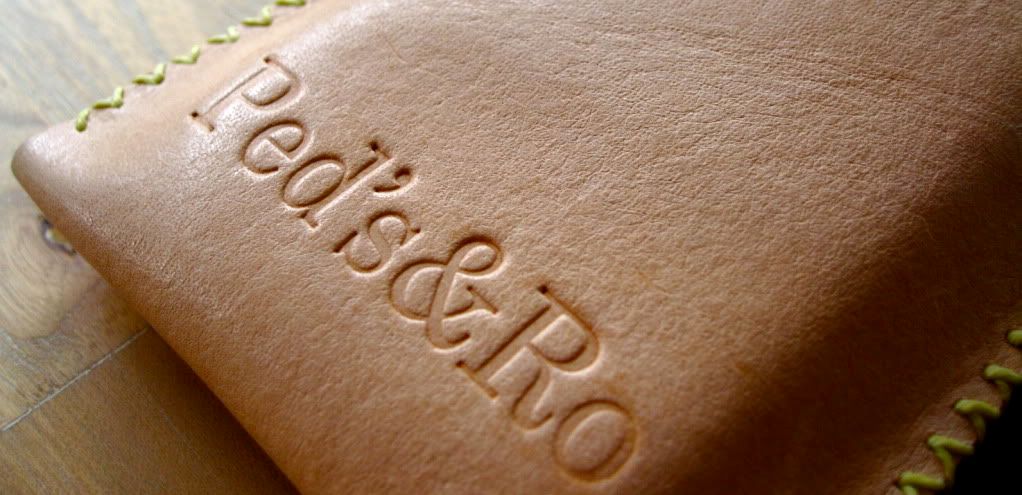
The design for the iPad pouch mimic the iPhone pouch, minimalist style to complement the gadget. This will be a permanent part of Ped's & Ro label. The pouch is design to fit first generation iPad but will fit second generation as well as it is thinner.

I have designed few different versions, but at this stage I will stick with the minimalist style. 

This blog post is worthless without pictures, without further ado:
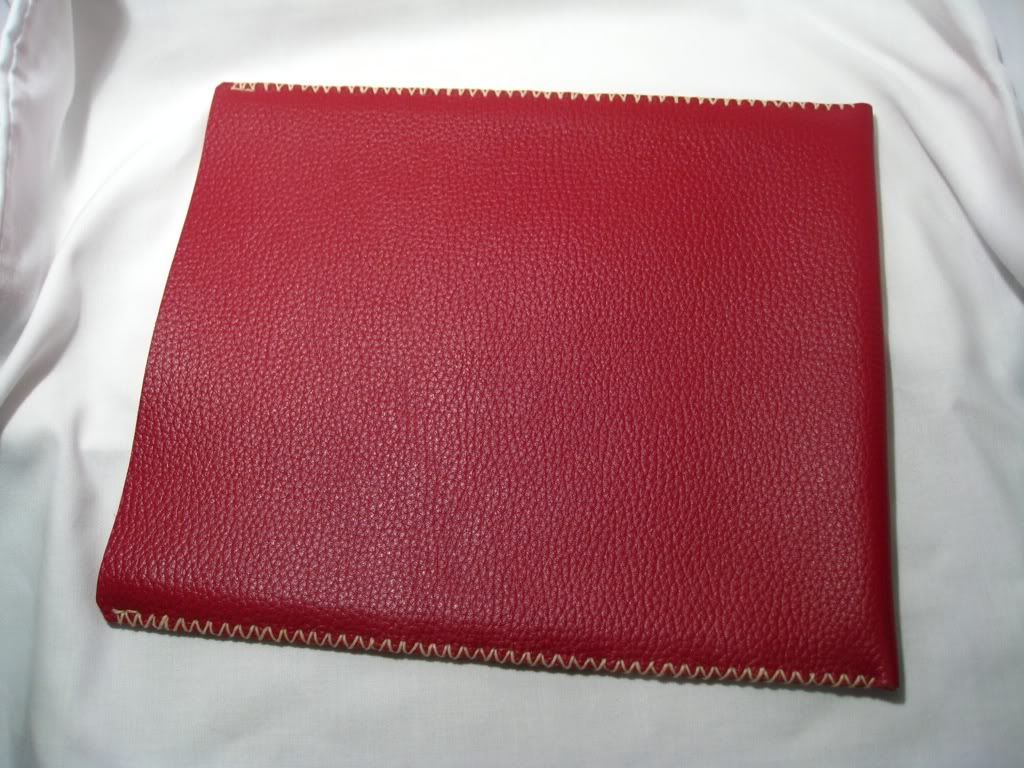
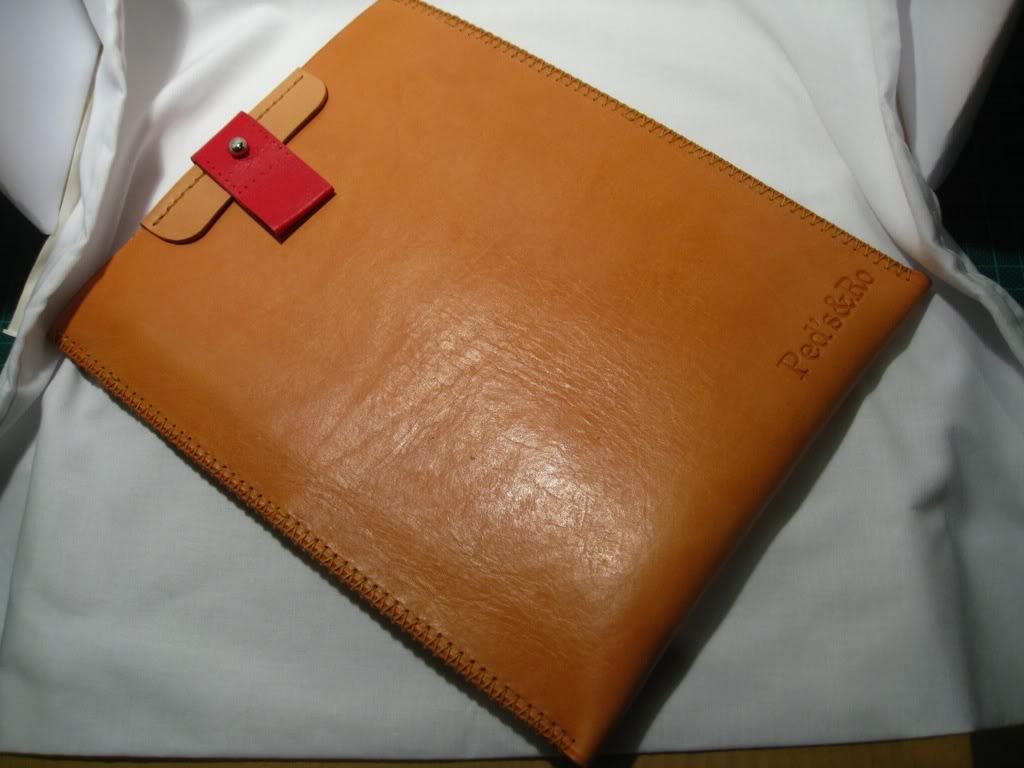
Deep Red Shrunken-Grain leather. This is one of my favourite leather, quite heavy at 2.5mm, gorgeous colour. 


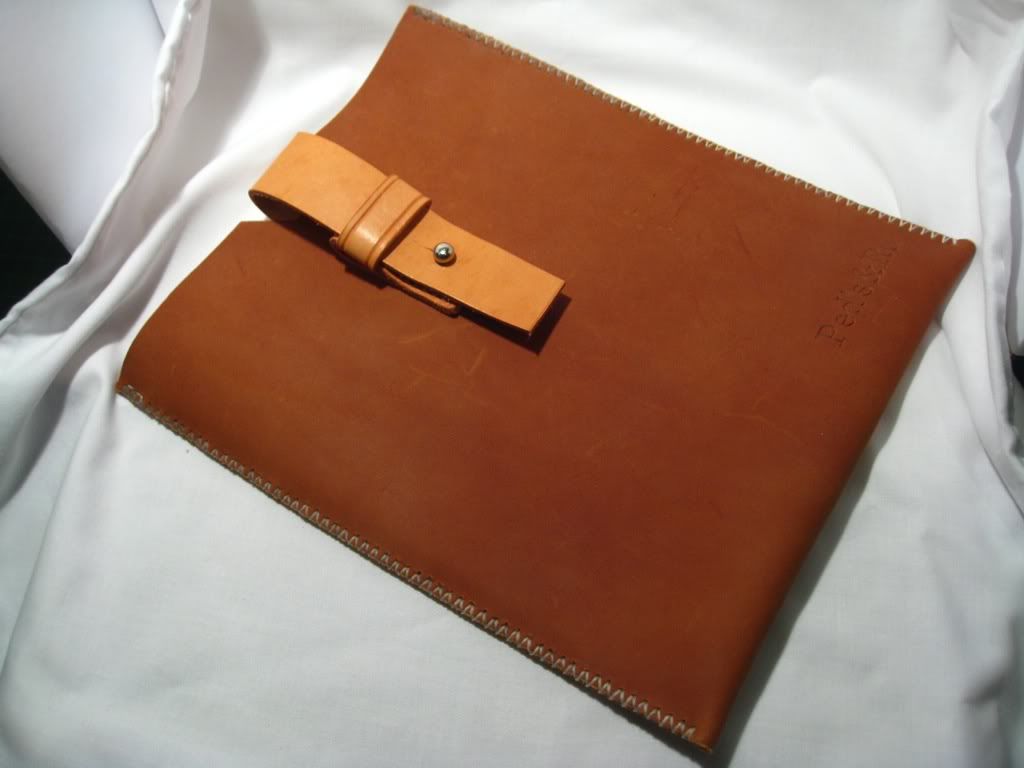
Tan Oiled leather with loop closure. This leather has a very lovely hand feel, almost warm to touch, smells great too. Quite heavy at 2.5mm.


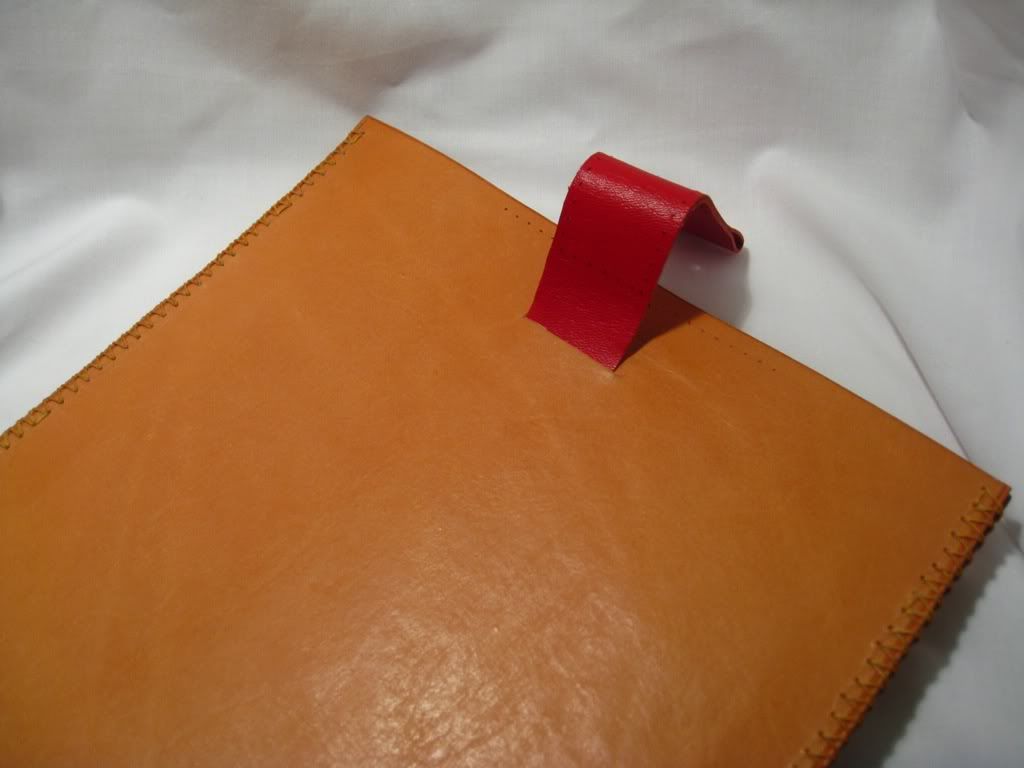
Sealed Vegetable-Tanned leather. I designed this pouch with internal pull out that gracefully 'lift' the iPad out. The loop is made from Veg-Tanned Kangaroo leather and is perfect for the job, it's thin enough not to be obstructive and strong enough not to stretch out. The loop also double as a closure.
No metal part is exposed from the inside of the pouch.


Back view

Saturday, April 9, 2011

A Short Intro to Leather: Tanning Processes

To get to know the quality of a leather product further, i believe it is crucial to know what and how the animal hide was tanned. Tanning, in a few words is simply the preservation and making of leather. Further, it is the process of using chemical compounds to permanently alter the protein structure of the animal skin, thus turning it from a rawhide to leather.

There are many different types of tanning process that i can go through, but for now i'm going to just focus on the main two and briefly on a third: Vegetable-Tanning, Chrome-Tanning and Chrome-Free Tanning. This will be the most frequently seen tanning process on the everyday leather products that we buy.

Vegetable-Tanning. This is where it all began. An ancient (thought to be approx. 5000 years old or so) tanning process, this form of leather are mostly used for saddlery, carving, luggages, belts, hats, dog leashes, furniture and other products that needs leather to be easily moulded and worked with. Its greatest strength would be its toughness and flexibility. Dampen it a little and you can easily mould it to different shapes! Of course, soak it and it will lose its shape and also color. Vegetable tanning uses a natural chemical called Tannin comprising of organic materials such as tree barks and leaves and thus giving it its natural brown color. Previously taking almost a year, advancement of technology now allows approximately only (still long!) one to three months to complete the whole process.

As you can see from the majority of my leather work, vegetable-tanned leather is my preference due to its workability, naturalness, and beauty.

Vegetable-Tanned. Its texture is simply raw and natural.
A roll of vegetable-tanned leather at home.

Chrome-Tanning. Moving on to a more modern take on tanning and only taking a mere day to complete the process, this modern (1950s) process is now predominantly used in the leather shoes, clothing and upholstery industry where quick turnovers and cost efficiency is important. Your leather jackets would be chrome-tanned. So would the leather in your car. This process uses chromium sulfate and other chromium salts. Once tanned, it leaves the hide with a light blue shade, hence this product is commonly called "Wet Blue" hides. It does not discolor or lose its shape when soaked in water. It is also softer to touch and more pliable, not tough or structured like its medieval counterpart. Most importantly, you can dye it into any color you want!

Chrome-Tanned. Showing the wet-blue color at the centre. 
Chrome-Tanned. A hide still with its fur intact.


Synthetic-Organic Tanning (Chrome-Free).  Now used in infant shoes and car upholstery, this is chrome-tanning, without the chrome! This is a more eco-friendly alternative to the usual chrome-tanning process, where synthetic or organic materials is used instead. 


In the next post, i will cover the different segments of the animal hide (butt, leg, etc) and which leather products they are used in. I don't have a specific number of posts for this series but there will be plenty more coming. There are a lot to explore and understand about leather, and i myself am still learning something new everyday.

Wednesday, April 6, 2011

Art of Batik

I've been searching for a lining material for my leather product. It needs to be unique, colorful and durable. After a long ponder, it hit me. The perfect material has been in my life all along! it's Batik. 

My late grandparents and my auntie are Batik merchants in a small town in Java, Indonesia, called Cirebon. when I was little, I used to spend a lot of my school holidays in Cirebon. I remembered the stacks of Batik fabric in their shop and the unique smell it has. I also remembered visiting a place where they make Batik, it was quite interesting. My mother also told me that our family has a heirloom batik that has passed down many generations. She was the trustee for the heirloom until she donated it to the museum.

Batik is an ancient art form, it's believed to have existed more than 1000 years ago. The word itself is Javanese origin.

Anyway, you can differentiate Batik in two main categories, Batik Tulis and Batik Cap. The former is entirely made by hand using Tjanting and is time consuming to produce. The later was invented in the 20th century and is used to mass produced Batik. The literal translation of Batik Tulis and Batik Cap is Written Batik and Block Print Batik respectively.

For more information on Batik please visit the Wikipedia page: Batik in Wikipedia 
 
In the spirit of handcrafting all of my product, Batik Tulis cannot be more perfect, it relates to me on a personal and intimate level and the material itself is rich in history and artistic nature.

I happened to find a roll of Batik fabric still in a box while cleaning out the closet the other day. As soon as I opened it the smell hit me and brought back my childhood memories, it was a strong feeling.

It's a beautiful piece, it's the Tulis type, which is just right. It's a bit dark for my taste but one can always custom design one when the time is right.

I'm going to do some test run with the fabric and see how it fit together with the leather, fingers crossed it will be a unique collaboration.

As always, some pictures of the fabric:


Friday, April 1, 2011

A Short Intro to Leather: Forms of Leather

In my previous post, A Short Intro to Leather: Types of Leather Finishes, I introduced and explained the various types of leather finishes that you will see in the market such as Aniline, Nubucks and so on. They are basically finished leather ready to be used to make your bags, shoes, clothing and even horse saddles.

As leather is a natural product, the most natural and unaltered animal hides are considered the highest quality. They may stain and scar more easily, but that is the characteristics that allows leather to be at its best.

This post will focus on the various forms of leather, mainly referring to the grain quality of the hide. Simply, these are the actual raw quality of the animal hide before tanning and finishing. There are three forms: Full grain, top grain, and corrected grain.

Grain refers to the outer layer or epidermis of the animal skin where the hair or fur grows.

Full Grain. Only the finest leather products are made from full grain leather. This refer to hides that have not been buffed or sanded to remove scars. This means that the natural hair patterns are more visible and there is natural breathability. Due to its raw nature, it also develops a nice patina through time and use but is not resistant to stains and scars. Full grain leather are used for full-aniline and semi-aniline finishes.

Top Grain. Less superior to full grain, this leather has been buffed or sanded to remove traces of scars on the skin but not to the extent of corrected grain leather. It being buffed means having the top rich protein layer removed hence not as strong as full grain leather. It is also finished with a surface coat as well. Unlike the full grain leather, it has a more plastic feel and will not develop a natural patina throughout its life. However, the benefits of top grain leather are its cost efficiency and resistance to stains.

Corrected Grain. This leather does not have the same high standards as a full grain and top grain. As the name suggest, its grains and imperfections have been corrected to give it a uniform look and then artificial grains are embossed. Inferior hides not suitable for full grain and top grain leather are used. It is usually coated with a thick finished to maintain and stabilize its artificial grain.  Corrected grain leather are the least expensive but least durable as well.

In the next post, i will cover the different tanning process that again defines the quality of the leather product.

Wednesday, March 30, 2011

Phone Pouch with Card Slot (Personal Review)

It's time to do a review for the phone pouch with card slot. It's the oldest veg-tan pouch and the most used one.

Let's start with cosmetic appearance. I used two different type of veg tan for the construction, the body is made from 2mm and the slot is made from 1.5mm. The patina has fully developed for both leather.

I really like the patina on the 1.5mm leather. It's velvet like to touch and much smoother compare to 2mm one. The shade is also lighter on this one.

When i first made the slot, i had a feeling that overtime with use the slot will become loose and card will not be held securely. I was a bit surprised that it held up quite well. I sticked with 5 cards and to this day it still hold them securely. It may have something to do with the way I stitched it, it has more holes per inch than my usual stitching and this may help the leather retain it's shape.

The thread still in a very good condition. It still has good tension and only slightly fraying.

The embossed logo still retain it's shape well and I feel it will remain so for the lifetime of the pouch.

The edge on the opening has also sealed up nicely, I've retouched it once with plain beeswax just to tidy it up.

As for maintenance, I've only waxed the pouch once with a plain beeswax then burnished it lightly with a canvas cloth. It made the leather softer and more supple.

Overall I'm quite impressed on how the pouch has held up and the character it gained. This has given me a better understanding on the material that I'm currently using and identify things that can be improved.

Some pictures for illustration purposes:


Wednesday, March 23, 2011

A Short Intro to Leather: Types of Leather Finishes

When shopping for leather or leather goods, it is useful and important to know the quality of the leather you are putting your money into and to justify that purchase. With the advancement of leather processing technology, it is now more difficult to distinguish between the higher and lower end of leather quality. Sometimes you cannot tell the difference at all. The key to premium quality leather is its aging process. Through time and use, quality leather will develop and age gracefully, revealing a soft and supple touch to it.

There are several parts to a description of leather. One is its form, second is its tanning process and third is its dye or finish. This post will cover the types of finishes on leather, which gives it its final color. The form of leather which are full grain, top grain, corrected and split are the actual quality of the animal hide before it is tanned or dyed.

An elaborate description of a leather could be a full grain, aniline dyed, chrome-tanned leather. It basically describes the quality of the animal hide, how it was dyed and the tanning process, all contributing to the final quality of the leather.

I will cover the forms and tanning types in future posts.

The types of leather finishes are:

Aniline. The type of leather by where it has been dyed with soluble dyes without a topcoat paint or pigment. This can be further broken down into several types.

  • Full Aniline.  The optimal leather where only the best selection of animal hides can be used to produce this type of leather. This leather is the most natural looking but is not as resistant to soiling as the other types. When feeling the leather, the creases and markings will be visible and distinct depending on the animal species as there are no oil, wax or surface coating. It also has more grip to its feel.
Full Aniline. Grains of the leather are still visible

Full Aniline with shrunken grains

  • Pull-Up Aniline. Having the same properties as Full Aniline but with an extra top treatment of oil or wax. This type of leather will eventually have a distressed look to it with time and use.
  • Semi-Aniline. Again, similar to that of Full Aniline, but it with a light pigment coating on the surface to increase its strength and durability. More resistant to soiling. This leather will have a softer finish to that of Full Aniline. With touch,  it will have a soft and finished feel as the creases would have been almost filled with the top coat.
Semi Aniline. Embossed. Original grains less visible. More glossy finish.

  • Nubuck. This is actually also aniline leather but one that have been buffed or brushed in a way that produces a soft velvety feel. This is not to be confused with Suede (the underside of the skin with a shaggy finish). It can be either types of Aniline leather. 
Nubuck. Velvety, furry feel over the surface

Pigmented or Protected. Not the most natural but is the most durable. Mostly used in upholstery such as furnitures and cars. Hides with scars and heavy markings can be used as it will be eventually buffed or corrected. An embossing with a grain pattern will usually follow to produce a uniform color and resistance to fading and scratching.

Bycast or Split. As the name suggests, this is not purely full leather. It is several pieces of leather (hence, split) glued together and then embossed. You may not be able to tell the difference when it's new but with time, the polyutherane/glue will eventually crack and split free the pieces of leather. It will not exhibit any characteristics of genuine leather such as the patina, suppleness or the developed feel with age. The only benefit is its price and inferior quality hides or leftover parts of a good quality hide being able to be used for this type of leather. This type of leather can be found mostly in cheaper furnitures

This brief introduction should give you a good idea on how to identify the many different types of leather in the market. Some are more identifiable than the other, but it will be easy after a while. Irregardless of whether it is pigmented or full aniline, good quality leather will prove itself worthy through time.


Wednesday, March 16, 2011

Phone Pouches Available on Etsy

As the title suggest, I have put some of the pouches that I made available on Etsy.

At this stage, only the minimalist versions are on offer. I will introduce other version in the coming weeks or so. The plan for immediate future will be introducing pouches for iPads and laptops.

Please visit my shop at Etsy on below link:

Ped's & Ro Etsy Shop